

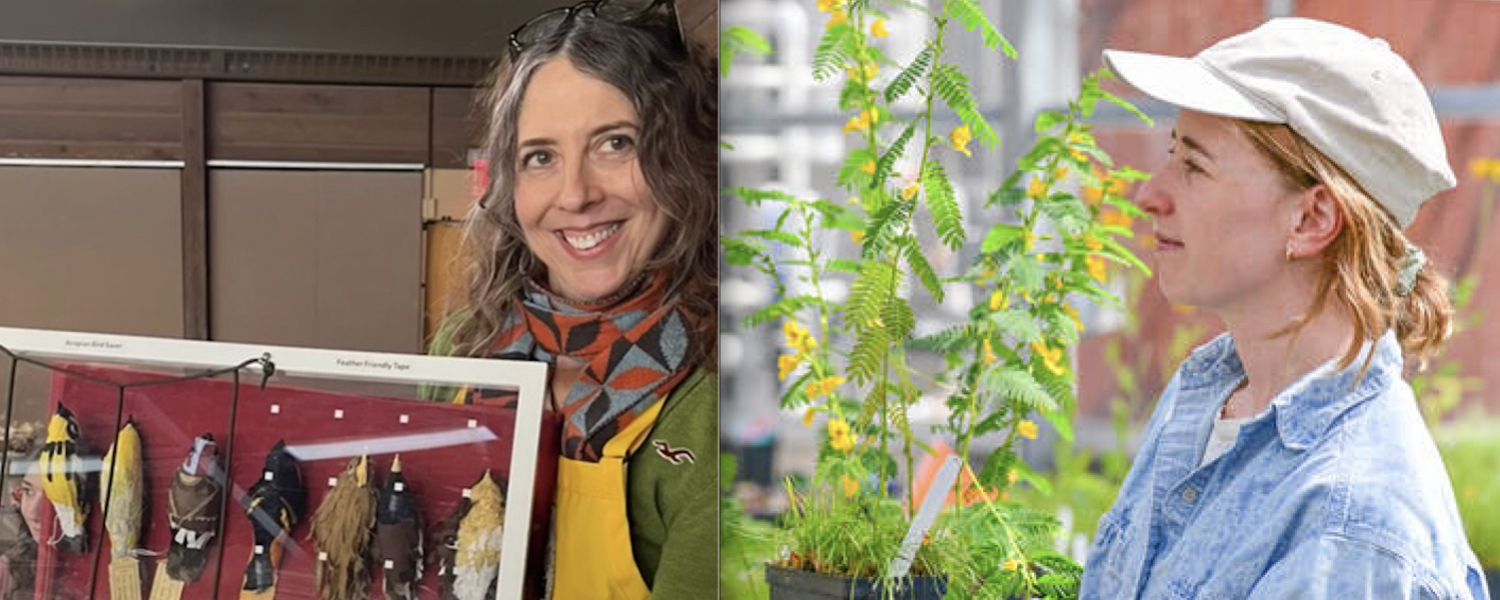
This month Nurturing Nature presents two Evanston conservation initiatives, aimed at biodiversity. Their work demonstrates how much difference they, as individual Evanston residents, make.
Bird Collisions in the Anthropocene A national conservation and community art project based in Evanston which raises awareness about bird collisions through public crafting workshops. This crowd-sourced environmental art project invites participants to help craft over 10,000 bird replicas, one for each bird killed and collected in Chicago in 2023, and learn about ways to prevent collisions through window remediation techniques. The finished artwork will be a sculptural carpet measuring over 300 feet in length representing over 250 species of birds crafted by over 10,000 participants from around the globe.
Results from the RustyPatched Bumble Bee project in Evanston This talk shares key findings from the Evanston Host Plant Initiative: Host Plants for the Rusty Patched Bumble Bee, a community‑science effort in which 275 residents documented and grew host plants for this endangered species in 2022. We’ll explore what iNaturalist data revealed about plant distribution, habitat hot spots, and foraging connectivity across Evanston, as well as what we learned from surveys about gardening practices and perceptions of pollinator conservation. The session highlights how collective action in private yards can meaningfully expand habitat for an endangered pollinator.
Holly Greenberg, the artist/director of The Bird Collisions in the Anthropocene project, comes to Evanston after 25 years as a tenured art professor at Syracuse University where she worked with undergraduate and graduate students in the field of printmaking. She recently relocated the headquarters of the Bird Collisions project to a studio/storefront in Evanston’s West Village Arts District where she invites the public to assist in the creation of this large-scale environmental art project. During her free public birdcrafting workshops, Greenberg provides education and solutions about the widespread problem of bird-building collisions.
Libby Shafer is an urban ecologist fascinated by lawn culture, bumble bees, and social and environmental change.She is currently pursuing a PhD at Northwestern University and the Chicago Botanic Garden’s joint program in Plant Biology & Conservation in the Rethinking Lawns Lab. Her socio‑ecological research explores how shifts in lawn culture can better support plants, people, and pollinators. Libby was born and raised in Evanston and recently moved back. She also serves on the City of Evanston’s Environment Board.

